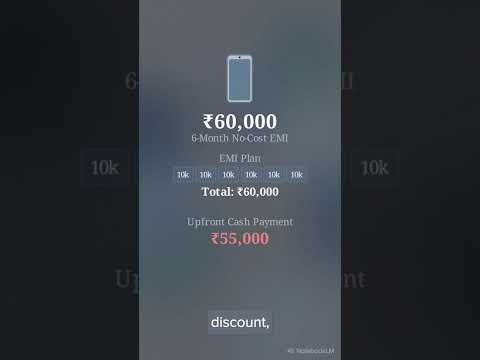
"No-cost EMI" sounds exactly like what it says — buy now, pay later, no extra charge. In reality, the cost rarely vanishes; it usually gets baked into the price upfront, or the discount you'd have gotten for paying cash simply disappears. The EMI isn't free — you've just paid for it differently.
Here's how to check. Look at the cash or full-upfront price for the same item, often available if you ask or check elsewhere. If a ₹60,000 phone is ₹60,000 in EMI but ₹55,000 if paid upfront, that ₹5,000 difference is the "no-cost" EMI's real cost — it's just been moved into the sticker price instead of appearing as a separate interest line.
This doesn't mean no-cost EMI is always a bad deal — sometimes the upfront and EMI prices genuinely match, particularly during certain promotions, and spreading a large purchase over a few months at zero extra cost can be a perfectly sensible way to manage cash flow. The issue isn't the EMI itself; it's assuming "no-cost" always means what it says without checking.
The practical habit: before taking a no-cost EMI on anything significant, ask what the price would be if you paid in full today. If the numbers match, take the EMI with confidence — you're getting genuine flexibility for free. If they don't match, you're not avoiding interest, you're just paying it somewhere less visible. Either way, knowing the real comparison is what makes it your informed choice rather than a marketing trick that worked.